MUAY THAI FOR SELF DEFENSE — STRENGTHS AND LIMITS
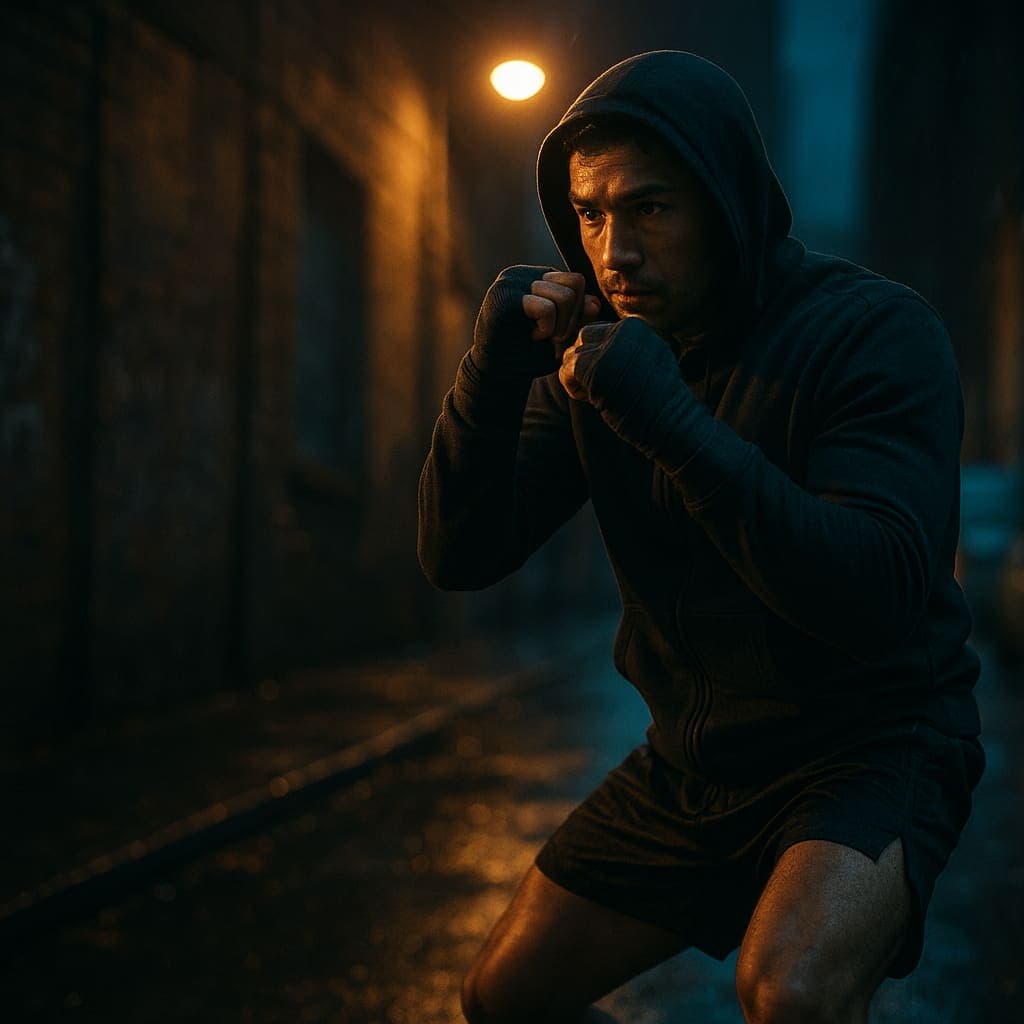
Muay Thai is regularly ranked among the most effective martial arts for real-world self defense, and with good reason. The techniques are battle-tested in full-contact competition, the training builds the cardio and mental composure required to function under stress, and the weapons of the art, eight limbs including elbows and knees, are highly effective at close range where most real assaults happen. However, Muay Thai is not a complete self-defense system, and honest practitioners should understand its strengths and its limits before relying on it in a dangerous situation.
The strengths come first. Muay Thai builds the attributes that matter most in real confrontations. Cardiovascular conditioning lets you function when adrenaline floods your system and your breathing goes ragged. Pain tolerance developed through training means a minor hit will not panic you. The composure built up through sparring rounds translates directly to staying calm and thinking clearly when someone is threatening you. These attributes alone, independent of specific techniques, are what carry most people through real situations.
The techniques themselves are highly functional. Elbow strikes, in particular, are devastating in close quarters and require very little room to generate knockout power. A clinch-trained Muay Thai practitioner who finds himself grabbed by an aggressor can deliver knees and elbows that end the encounter quickly. Teeps create the distance required to escape or reposition, which is often more valuable than landing damaging strikes. Low kicks, used carefully, can neutralize an opponent's mobility without requiring high-level flexibility or coordination. The art teaches you to strike with your whole body, which means even a relatively smaller defender can produce serious damage against a larger aggressor.
Training structure contributes as well. Muay Thai gyms spar regularly, meaning practitioners are accustomed to having another human being actively trying to hit them. This is psychologically very different from martial arts that rely primarily on form practice. The adrenal response during live sparring is a pale imitation of a real fight, but it is closer than nothing, and fighters who have sparred for years are dramatically less likely to freeze in a confrontation than people who have only practiced in the air.
Now the limits. Muay Thai is a stand-up sport, and real assaults frequently go to the ground. If an aggressor tackles you, or if you lose your footing during a scramble, the techniques you have trained may not be directly applicable. This is why many serious self-defense practitioners pair Muay Thai with some grappling knowledge, usually wrestling or Brazilian jiu-jitsu, so they have options if the situation becomes horizontal.
Multiple attackers are another major challenge. Muay Thai training assumes one-on-one engagement. Real violence often involves several people working together, and no stand-up martial art handles this situation well. The best approach when facing multiple aggressors is almost always to create distance and escape, not to fight. Muay Thai does not specifically train for this, but the footwork and conditioning developed through training do help with the escape option.
Weapons change everything. A Muay Thai practitioner facing an unarmed opponent has significant advantages. The same practitioner facing someone with a knife or a gun has almost none, and trying to apply combat sport techniques against a weapon is a recipe for serious injury. Self-defense courses that specifically address weapons are a valuable supplement to Muay Thai training, and the general advice in weapon situations, prioritize escape over engagement, applies regardless of your martial arts background.
Legal and ethical considerations also matter. Muay Thai teaches you to damage people effectively. In a real self-defense situation, your actions will be scrutinized after the fact, and the legal system in most countries expects you to use only the force necessary to stop the threat. Elbowing a stranger into unconsciousness after they have already backed away may feel satisfying in the moment, but it is likely to result in criminal charges. Understanding the legal framework of self-defense in your jurisdiction is as important as the physical training.
Finally, awareness and avoidance are vastly more valuable than any fighting technique. The best fight is the one that does not happen. Noticing a bad situation developing and leaving before it becomes violent will protect you in far more scenarios than any combination of kicks and elbows. Muay Thai builds the confidence and capability to handle yourself if fighting becomes unavoidable, but the skill that most often saves practitioners in the real world is knowing how to spot trouble and avoid it entirely.