MUAY THAI FOR KIDS — WHAT PARENTS SHOULD KNOW
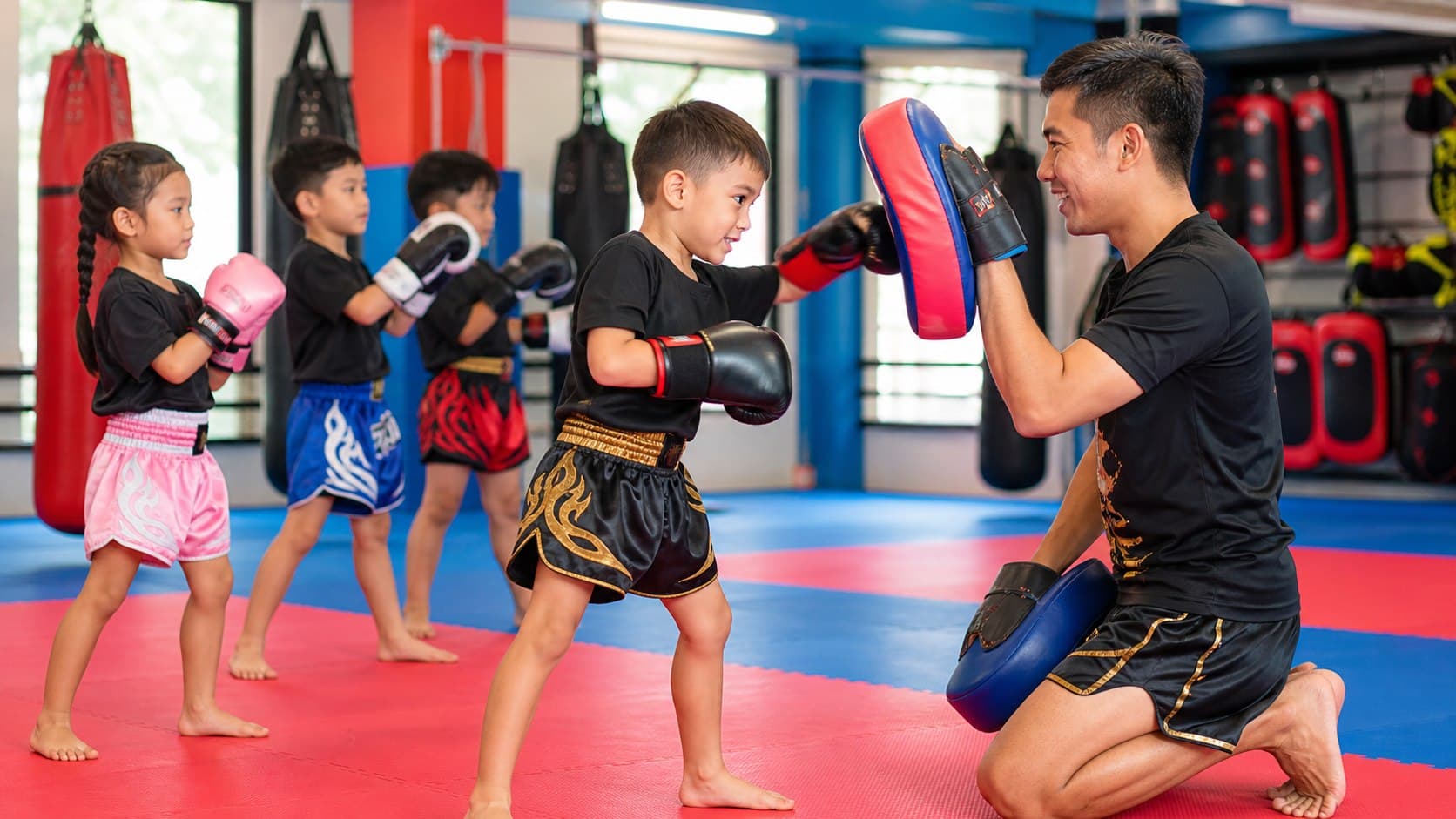
Muay Thai for children is a topic that generates strong opinions on both sides. Some people see combat sports training for kids as inappropriate or dangerous. Others see it as one of the best activities a child can do, building discipline, confidence, physical fitness, and self-control in ways that few other activities match. The reality is that both views can be correct depending on the specific program, the child's temperament, and the coaching. Parents considering Muay Thai for their children need to understand what to look for and what to avoid, so that the experience is productive and safe rather than traumatic.
The benefits of Muay Thai training for children, when done in a well-run program, are substantial. Kids develop physical fitness, coordination, and flexibility. They learn how to handle controlled physical challenges, which builds resilience and confidence. They make friends with other kids in the class, building social skills and belonging. They develop respect for coaches and training partners, learning the kind of discipline that transfers to school and home life. And they learn some degree of self-defense capability, which can be valuable even if they never need to use it.
The key is finding a program specifically designed for children rather than simply enrolling a child in an adult class. A good kids program emphasizes fundamentals, games, and enjoyable drills that build skills while keeping the experience fun. Sparring, if it exists at all, is carefully supervised and intensity is strictly controlled. Contact is minimal until children are old enough and skilled enough to handle it safely. Coaches have experience working with kids and know how to communicate age-appropriately. Class sizes are small enough that individual attention is possible.
Red flags when evaluating a kids program include coaches who push young children into hard sparring early in their training, focus on aggression and intimidation rather than technique and respect, have no particular experience working with children, or treat the kids program as an afterthought compared to their adult classes. A good kids program is a specialty, not a discount version of adult training. If the gym offers both, watch a kids class before enrolling your child and see how the coach interacts with the students.
Age considerations matter. Children as young as five or six can benefit from Muay Thai training, but at that age the classes should be almost entirely play-based, focused on fundamental movement skills, balance, coordination, and basic technique mechanics. Real sparring is inappropriate for this age. As children grow older, the training can become more structured and begin to include more specific technique work, eventually incorporating controlled sparring for teenagers who have developed solid fundamentals.
Competition is a separate question. Some kids programs produce young fighters who compete in sanctioned amateur bouts, while others focus purely on training without any competitive element. Whether competition is appropriate depends on the child, the program, and the nature of the competition. Well-run youth Muay Thai in Thailand has produced many champions, but it has also exposed young fighters to risks that concern pediatric sports medicine researchers. If your child wants to compete, ensure the competition is age-appropriate, supervised, and conducted under rules that protect young participants.
Head contact is a particular concern, and parents should be aware of the ongoing research on repetitive subconcussive impacts in young athletes. The brain is still developing in childhood and adolescence, and repeated impacts to the head, even at levels below concussion, may have long-term consequences. Good kids programs minimize head contact in training and competition, use protective equipment where appropriate, and prioritize technical development over power-based sparring. If a program does not take these concerns seriously, find a different program.
What to look for when visiting a kids class: do the coaches make the kids smile and have fun while still teaching real skills? Are the other students engaged and enjoying themselves? Is the gym clean and safe? Does the equipment fit the kids or have they been handed oversized adult gear? Is there a clear curriculum that progresses as students develop? Do the coaches communicate clearly with parents about goals and progress? Positive answers to these questions suggest a well-run program.
What to avoid: any program that immediately pushes your child into hard contact, any coach who uses fear or shame as motivation, any environment where kids seem miserable or intimidated, and any program that promises to turn your child into a fighter in six months. Good Muay Thai is built slowly, with respect and patience at the core. Programs that promise shortcuts are typically offering something very different from what they advertise.
For the right child in the right program, Muay Thai can be one of the best activities available. The physical benefits, the social benefits, the confidence, and the discipline compound over years of consistent training. Many adults who started as children say the same thing: the gym was one of the most important parts of their upbringing, and they carry the lessons with them into adult life. If you are considering Muay Thai for your child, do your research, visit several gyms, ask questions, and trust your judgment. The right program will be immediately recognizable by the atmosphere and the care that the coaches bring to working with young students.