HOW MUAY THAI SCORING ACTUALLY WORKS
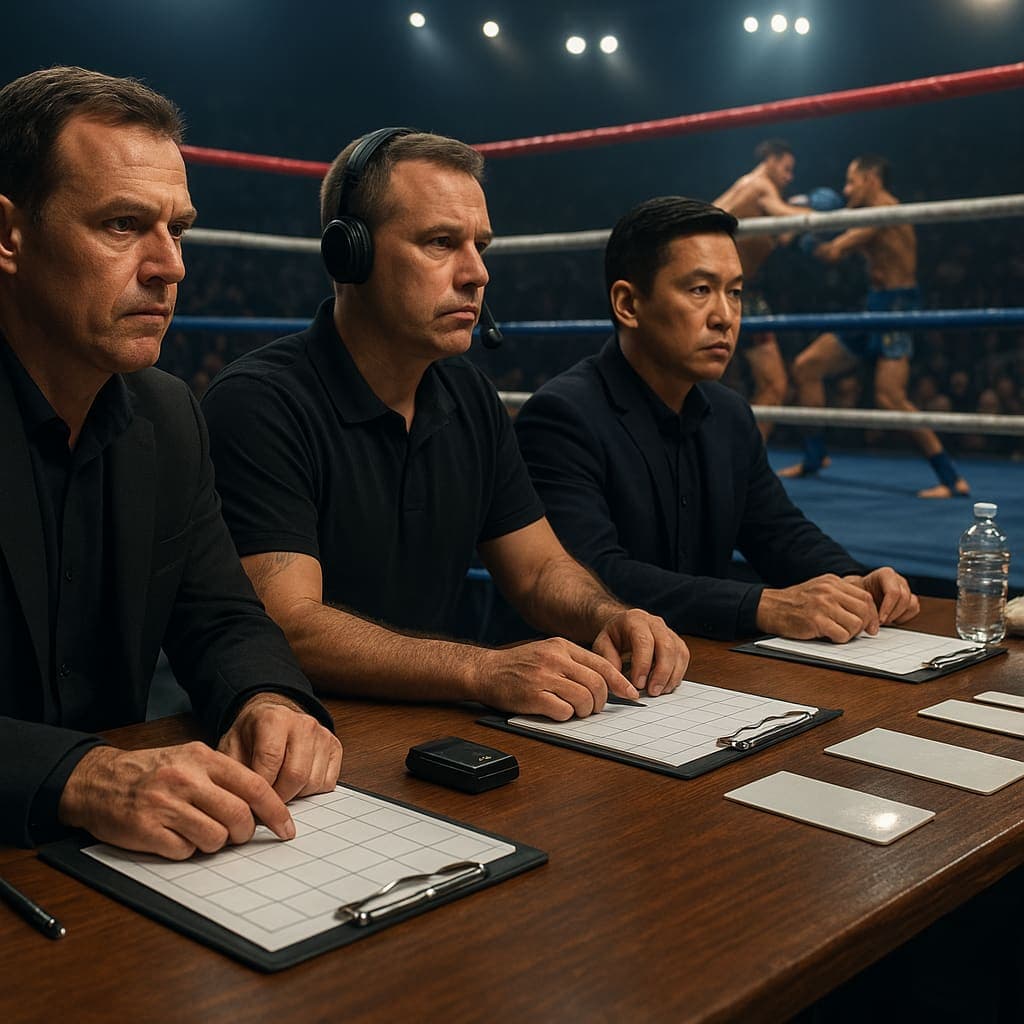
The scoring system in traditional Muay Thai confuses almost every Western viewer who watches their first stadium fight. Punches that look effective do not seem to count. A fighter who absorbs a body kick without flinching somehow wins the round. A knockdown in round one does not guarantee victory if the other fighter dominates rounds four and five. Understanding how Thai judges actually score fights is essential for following the sport at any level beyond casual viewing.
The first principle of Thai scoring is that the fight is scored as a whole, not round by round. Judges in Lumpinee and Rajadamnern watch the entire five-round contest and render a single overall decision at the end. They are not tallying points round by round like boxing judges under the ten-point must system. This changes the strategic calculation completely. A fighter can lose rounds one and two by wide margins and still win the fight convincingly by dominating rounds three through five. In fact, this is a common pattern in traditional Thai bouts.
The second principle is that rounds one and two are considered feeling-out rounds. Judges give them limited weight in their overall assessment. This is why Thai fighters often appear to coast through the opening of a fight, circling and exchanging light techniques without committing fully. They are studying their opponent, establishing distance, and conserving energy for the rounds that actually decide the outcome. A Western fighter who comes out guns blazing in round one against a Thai opponent often finds themselves exhausted by round three while their opponent is just beginning to engage.
The third principle is the hierarchy of scoring techniques. Kicks to the body and head are the highest-scoring weapons in traditional Thai judging. A clean roundhouse that visibly lands flush earns more credit than almost any other technique. Knees, especially those landed from the clinch, score nearly as well. Elbows are valued both for their damage and their aesthetic impact when they cut. Punches score the least, even when they land cleanly, unless they visibly hurt or drop the opponent. This hierarchy reflects the Thai view that true Muay Thai is about the eight limbs working together, not just the two fists that boxing emphasizes.
Balance and composure carry enormous weight. A fighter who catches a hard kick and walks forward as if nothing happened has scored a psychological point that judges recognize. A fighter who takes the same kick and visibly winces, stumbles, or retreats has lost ground even if they were otherwise winning the exchange. This is why Thai fighters train themselves to absorb strikes impassively. Showing pain is not just a tactical mistake; it is a scoring mistake. Conversely, making your opponent visibly react to your strikes accumulates credit even if the damage itself is minimal.
Clinch work is scored very differently in Thailand than in international Muay Thai organizations. In traditional Thai scoring, a fighter who establishes neck control, lands knees, and executes dumps or sweeps dominates the clinch exchange. The fighter who gets dragged around, who has their head pulled down repeatedly, who gets swept to the canvas, loses the exchange even if they were throwing plenty of knees themselves. The clinch is not considered stalling. It is considered one of the most important phases of the fight.
Ring control and forward pressure also matter. The fighter who consistently moves forward, cuts off the ring, and forces the exchange on their terms is generally favored by Thai judges, all else being equal. A fighter who spends the fight circling backward and countering, even effectively, may lose to an aggressor who lands less but dictates the pace. This principle can be frustrating for technical counter-fighters, but it reflects the Thai cultural preference for fighters who demonstrate heart and commitment.
International Muay Thai organizations like ONE Championship, Glory, and various European promotions have adapted scoring to better suit Western audiences. Rounds are often scored individually, punches receive more weight, and aggression is rewarded more directly. Understanding which ruleset governs the fight you are watching is essential for following the scoring accurately. A fighter who would dominate under Thai rules might lose under international rules, and vice versa. This is one reason why top fighters often specialize in one ruleset or the other rather than trying to excel in both.