HOW MUAY THAI SCORING ACTUALLY WORKS
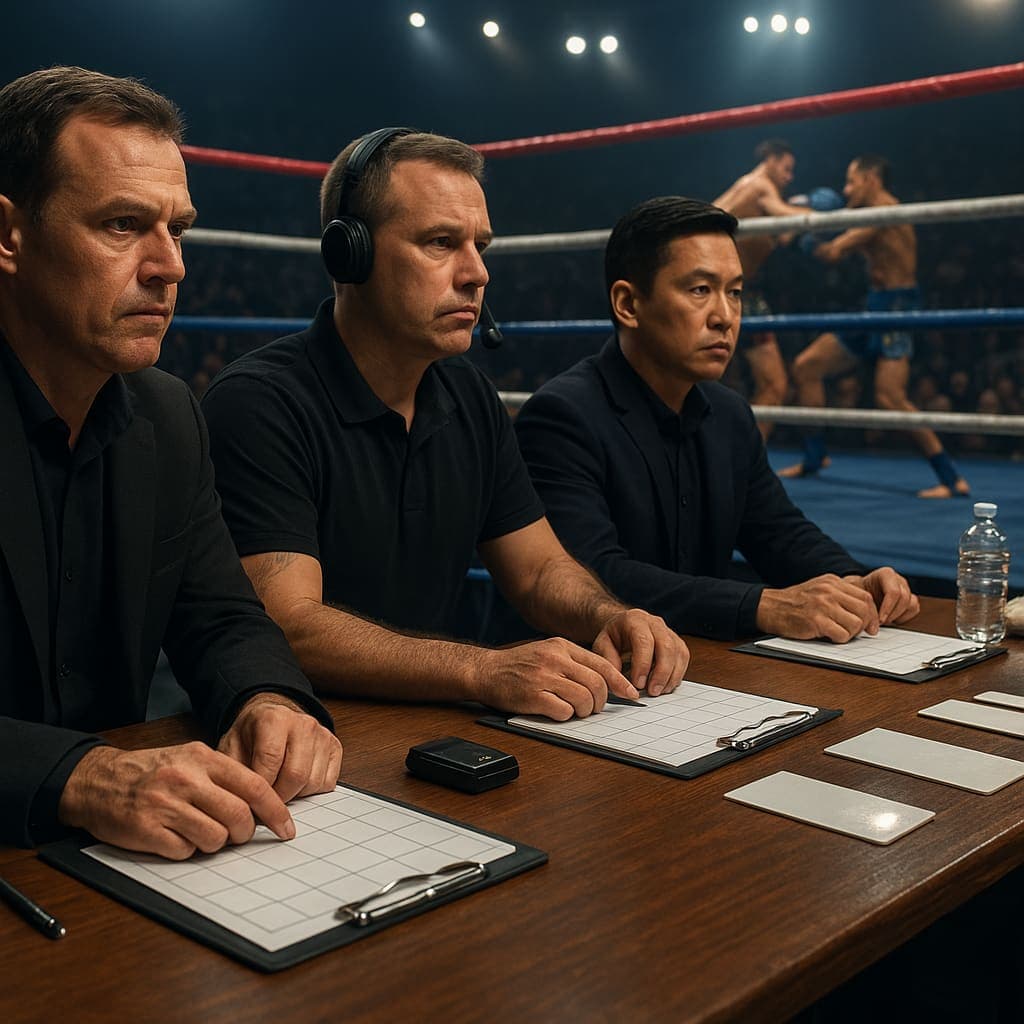
The scoring system in traditional Muay Thai confuses almost every Western viewer who watches their first stadium fight. Punches that look effective do not seem to count. A fighter who absorbs a body kick without flinching somehow wins the round. A knockdown in round one does not guarantee victory if the other fighter dominates rounds four and five. Understanding how Thai judges actually score fights is essential for following the sport at any level beyond casual viewing.
The first principle of Thai scoring is that the written code scores every round on its own. Under the Boxing Board's 2025 code, three judges score each round on a ten-point must system, much as boxing judges do, and no clause weights later rounds more heavily. The difference is judging habit rather than written rule. By long-standing convention, many Thai judges treat the opening rounds as feeling-out rounds, which changes the strategic calculation. A fighter who edges rounds one and two but is outscored in the last three usually loses.
The second principle is that, by convention, rounds one and two are considered feeling-out rounds. Many Thai judges score them 10-10 while noting who should have won them. This is one reason Thai fighters often appear to coast through the opening of a fight, circling and exchanging light techniques without committing fully. They are studying their opponent, establishing distance, and conserving energy for the rounds that actually decide the outcome. A Western fighter who comes out guns blazing in round one against a Thai opponent often finds themselves exhausted by round three while their opponent is just beginning to engage.
The third principle is the weapon preference. The written code names the fist, foot, knee and elbow as Muay Thai weapons and does not rank them. By long-standing convention, though, Thai judges favour clean kicks and knees that land with force, give elbows little credit unless they cut, and give punches little credit unless they visibly hurt or stagger the opponent. This habit reflects the Thai view that true Muay Thai is about the eight limbs working together, not just the two fists that boxing emphasizes.
By convention, Thai judges also notice balance and composure; the written code does not list them as criteria. A fighter who catches a hard kick and walks forward as if nothing happened may be read as the stronger fighter. A fighter who takes the same kick and visibly winces, stumbles, or retreats may lose ground even if they were otherwise winning the exchange. This is why Thai fighters train themselves to absorb strikes impassively. By that convention, showing pain is not just a tactical mistake; it can cost credit with the judges. Conversely, a strike that makes your opponent visibly show pain is more likely to be credited than one that does not.
Clinch work is treated differently in Thailand than in international kickboxing organizations. In traditional Thai judging, a fighter who establishes neck control and lands clean knees dominates the clinch exchange. The fighter who gets dragged around and has their head pulled down repeatedly loses the exchange even if they were throwing plenty of knees themselves. The clinch is not considered stalling. It is considered one of the most important phases of the fight. The Boxing Board code sets no time limit on the clinch, but it lists arm locks, neck locks, hip and shoulder throws, lifting slams, leg hooks, leg sweeps and trips as fouls.
Ring control and forward pressure also matter. The fighter who consistently moves forward, cuts off the ring, and forces the exchange on their terms is generally favored by Thai judges, all else being equal. A fighter who spends the fight circling backward and countering, even effectively, may lose to an aggressor who lands less but dictates the pace. This principle can be frustrating for technical counter-fighters, but it reflects the Thai cultural preference for fighters who demonstrate heart and commitment.
International organizations like ONE Championship and GLORY publish their own judging criteria. Rounds are scored individually on the 10-point must system; at ONE, if the totals are level the judges fall back on a tie-break of knockdowns, then damage, then the clean-strike count and aggression, and ONE's criteria do not name particular techniques. Understanding which ruleset governs the fight you are watching is essential for following the scoring accurately. A fighter who would dominate under Thai rules might lose under international rules, and vice versa. This is one reason why top fighters often specialize in one ruleset or the other rather than trying to excel in both.