THE SARAMA — THE MUSIC THAT DRIVES MUAY THAI FIGHTS
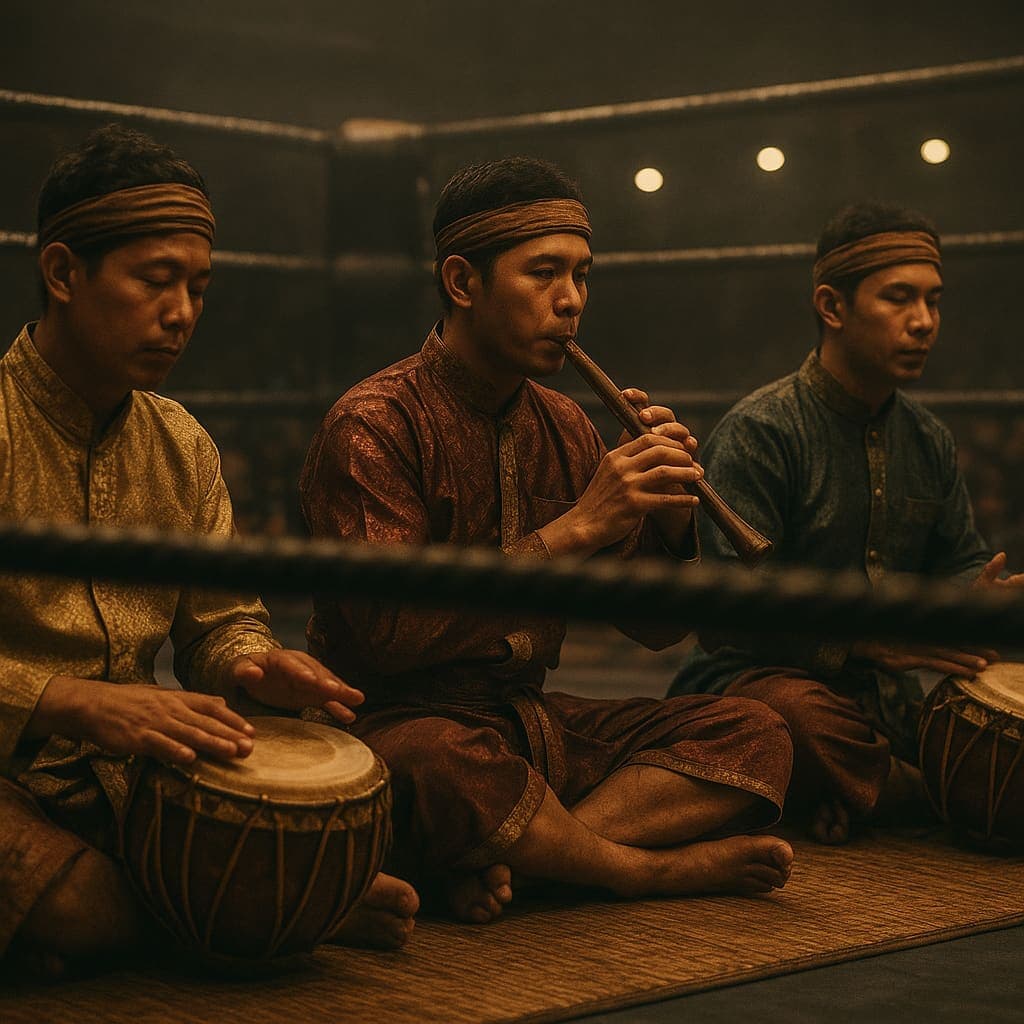
If you have watched Muay Thai in Thailand, or any broadcast that preserves the traditional presentation, you have heard the sarama. This is the live music that accompanies every traditional Muay Thai fight, played by a small ensemble at ringside throughout the entire bout. To new viewers, it can sound strange and even jarring at first, with its repetitive, building rhythms and high-pitched oboe melodies. To people who have spent time in the sport, it becomes inseparable from the fight experience, and watching a Muay Thai match without sarama feels incomplete in the same way that watching a film with the soundtrack muted feels incomplete.
The traditional sarama ensemble usually consists of four instruments. The drum, called a glawng kaek, provides the steady rhythmic pulse that anchors everything. The pair of small hand cymbals, called ching, mark the off-beats with a bright metallic ring. The Thai oboe, the pi chawa, plays the melody, a nasal and reedy sound that cuts through the crowd and carries to every seat in the stadium. In some ensembles, additional percussion or a second drum fills out the texture. The musicians sit at ringside throughout the fight, watching the action closely, and they play continuously from the Wai Kru through the final bell.
The function of the music is not decorative. It serves several specific purposes that are woven into the fabric of the sport. The first is to set the ceremonial tone. When the fighters perform their Wai Kru Ram Muay, the pre-fight dance, the sarama accompanies them. The melody during the Wai Kru is slower and more solemn, reflecting the spiritual and respectful nature of the ritual. Without the music, the Wai Kru would feel hollow, a movement without context.
Once the fight begins, the music shifts to a more driving rhythm. The tempo increases and decreases in response to the action in the ring. During the opening rounds, when fighters are cautiously feeling each other out, the sarama plays at a moderate pace that matches the exploratory nature of the action. As the fight heats up and exchanges become more intense, the musicians speed up their playing, signaling the increased intensity and pulling the crowd along with the rising energy. By the final round, when fighters typically open up with maximum aggression, the tempo is almost frantic, driving the action to its climax.
Fighters respond to the music in ways that outside observers often miss. Experienced nak muay time their attacks to the rhythm, using the driving beat to generate commitment and the slower passages to reset and breathe. The music acts as a kind of metronome for the fight, and fighters who have grown up with sarama find that it becomes part of how they pace themselves. Some foreign fighters who come to Thailand initially find the music distracting, but after a few fights they report that it feels natural and even necessary to their rhythm.
For the crowd, the music amplifies emotional engagement. The rising tempo in later rounds builds anticipation in a way that a silent fight cannot. The collective response to an exciting exchange is heightened by the urgent driving of the pi chawa. Thai stadium audiences, particularly the betting crowd, are highly attuned to the music, and the rise and fall of the tempo correlates closely with their cheering and wagering.
The roots of the sarama tradition go back centuries, to the era when Muay Thai was a battlefield martial art and not yet a stadium sport. Music has been associated with Thai combat from the earliest historical records, and the modern sarama is a direct descendant of the music that accompanied traditional contests and royal tournaments. This deep historical connection is one reason the music has survived into the modern era, even as other aspects of the sport have been modified or commercialized.
If you watch Muay Thai outside of Thailand, particularly in international promotions, you may find that the sarama is replaced with recorded music or even dropped entirely. Some promotions have taken the step of insisting on live or high-quality recorded sarama for their broadcasts, recognizing that the music is not an optional cultural accessory but an integral part of what makes the sport unique. For newer fans, listening to traditional fight broadcasts with the sarama intact is the fastest way to develop an ear for it. After a while, you will find that a Muay Thai fight without the sarama feels incomplete, as if something essential has been edited out.