THE ART OF THE TEEP — MUAY THAI'S PUSH KICK
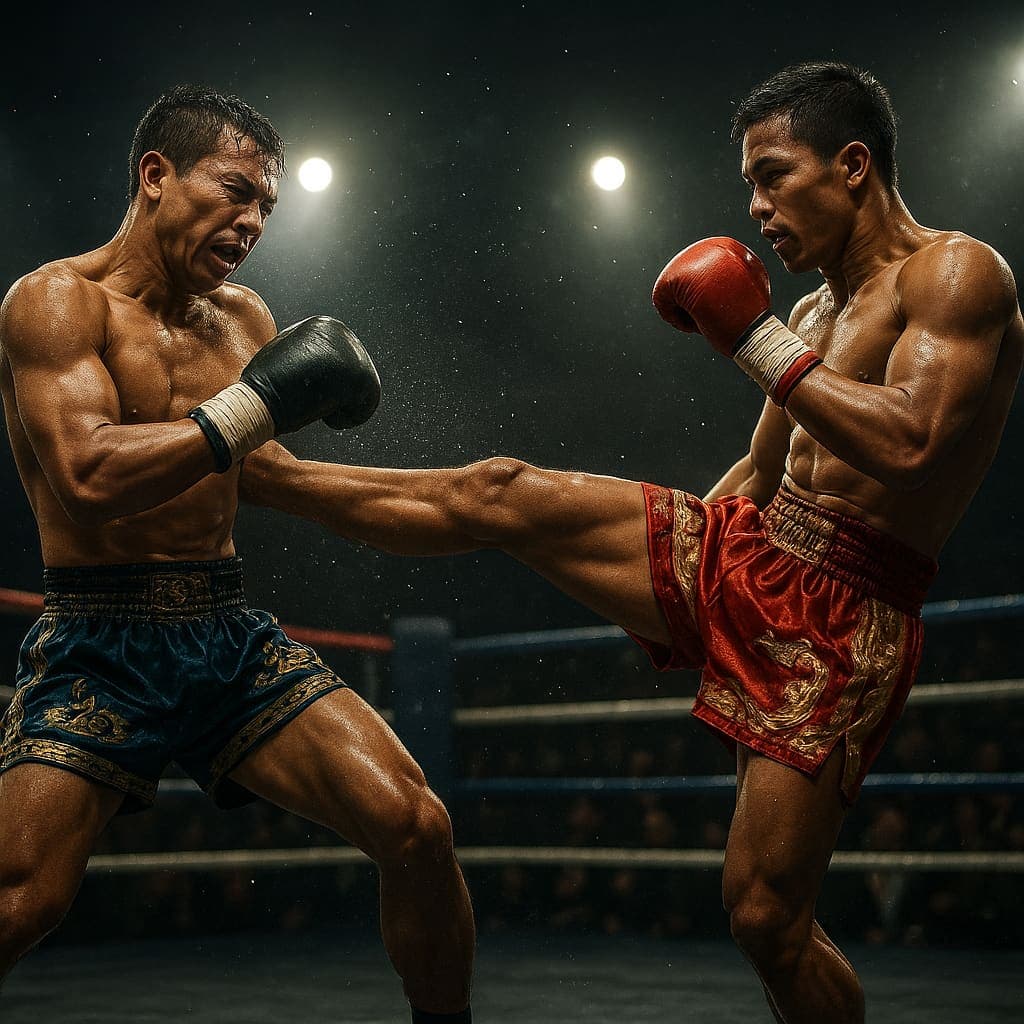
If Muay Thai had a jab, it would be the teep. The push kick, or teep in Thai, is one of the most fundamental and one of the most underrated weapons in the entire sport. To watch a fighter like Saenchai use it is to watch distance management as a form of art. Opponents who want to get inside cannot, opponents who want to stand still cannot, and opponents who try to rush the clinch find themselves planted on their heels before they even finish a step. The teep is not glamorous. It does not produce highlight knockouts. But it wins rounds and controls fights in ways that more dramatic strikes cannot.
The basic mechanic of the teep is simple. Lift your knee straight up in front of you, then drive your foot forward through the target. The contact surface is the ball of the foot or the sole, depending on preference and the height of the target. The knee should come up first, hiding the intention for as long as possible, and then the leg extends explosively. The power does not come from the leg alone. The hips drive forward along with the kick, and the supporting leg can even take a small step backward for distance if the opponent is closing hard. Think of a piston rather than a swing.
Used as a distance manager, the teep is almost impossible to deal with. A fighter who stays just outside teep range cannot close without eating the kick in the stomach or thigh, and a fighter who gets caught by repeated teeps loses both composure and breath. Thai fighters use the lead leg teep like a boxer uses the jab, flicking it out dozens of times per round to dictate where the fight takes place. The rear leg teep carries more power but telegraphs slightly more and is used selectively, often to drive an opponent back toward the ropes or into a follow-up strike.
Used as a disruption tool, the teep is devastating to rhythm fighters. A boxer who likes to set up combinations needs planted feet and stable distance. A knee fighter who wants to close into the clinch needs forward momentum. The teep takes both of those away. Landed to the chest or belly at the right moment, it stops an opponent cold, breaks their cadence, and forces them to reset. The best Thai fighters use teeps not to score but to prevent the opponent from scoring, frustrating them into wild attempts that open further opportunities.
Used as an off-balancing tool, the teep can be aimed at the thigh, hip, or even the shoulder. A teep to the front of the thigh while an opponent is loading for a kick will dump them onto their back foot. A teep to the hip as they step in can spin them sideways, opening a clean side to the body or head. Saenchai has built many of his most famous moments around teeps that look almost casual but completely destabilize his opponent before the follow-up strike lands.
Defensively, the teep has a subtle but important use. When you are cornered or under pressure, a well-timed teep to the chest buys you the split second you need to reset position. It is the closest thing Muay Thai has to a reset button. Many fighters under-use this application and pay for it by spending too much time on the back foot eating pressure.
The most common mistake beginners make with the teep is throwing it lazily, pushing with the foot instead of driving with the hip. A lazy teep barely moves the opponent and just exposes the kicker. A hard teep feels like getting hit in the stomach with a fence post. Drill the kick on the heavy bag and on the pads until it drives the bag hard enough to swing on its chain, not just wobble. Once you can teep with authority, you will find that rounds become easier, that you get hit less, and that the fighters you spar with start complaining about how frustrating you have become. That is the teep working exactly as intended.