THE HONEST TRUTH ABOUT SHIN CONDITIONING
Shin conditioning is one of the most misunderstood topics in Muay Thai, and the internet is full of bad advice that ranges from mildly useless to actively dangerous. You will find videos of people rolling bottles up and down their shins, beating their shins with baseball bats, and kicking palm trees until they limp. These methods are either ineffective or cause damage that takes months to recover from. The honest truth about shin conditioning is simpler, slower, and far less dramatic than the mythology suggests.
The most important concept to understand is that shin conditioning is not about making the bone harder. Bones do not become significantly harder than they already are. What does change, through a process called bone remodeling, is the microstructure of the tibia and the surrounding periosteum. Repeated moderate impact stimulates the bone to lay down additional mineral density along the lines of stress, making the shin more resistant to fracture and, just as importantly, reducing the pain response over time. The skin and soft tissue on the front of the shin also thicken slightly, and the nerve endings become less reactive to impact.
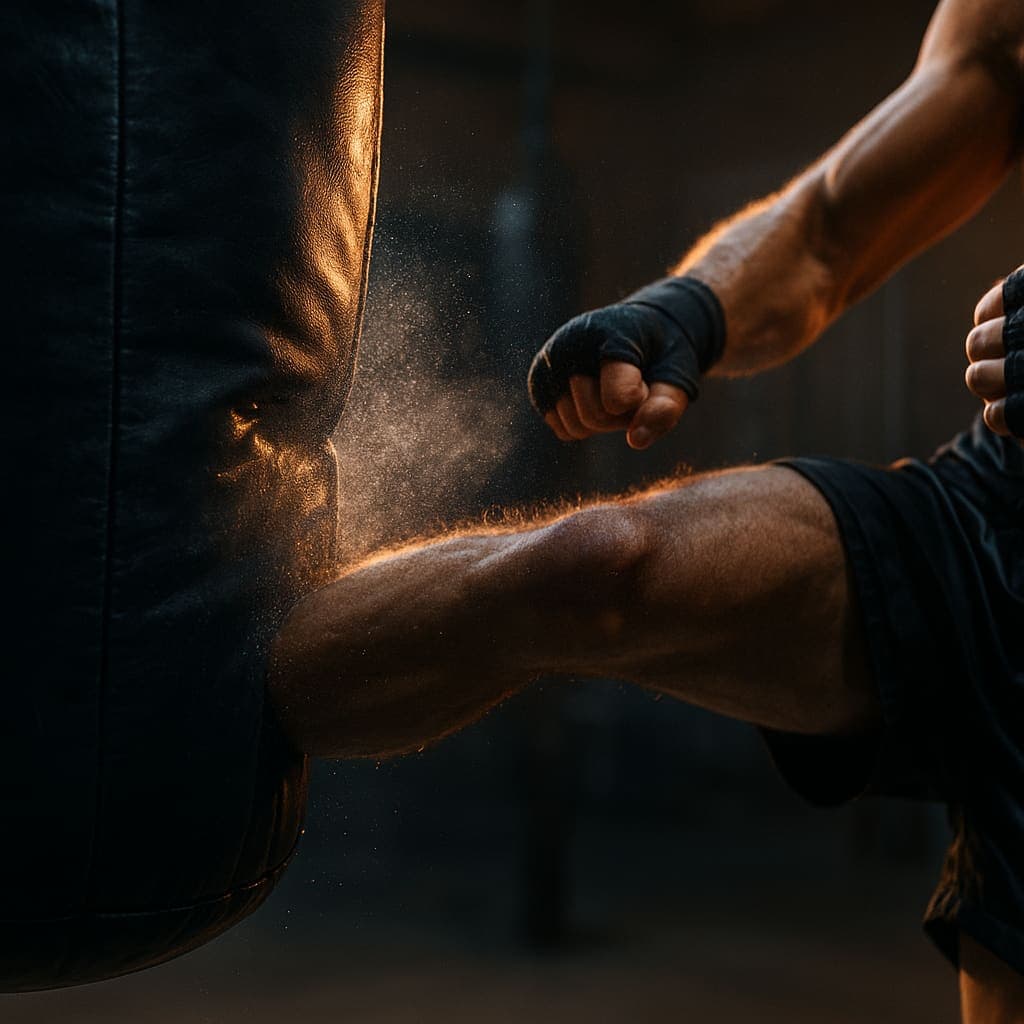
This process happens naturally through normal Muay Thai training. The heavy bag is the single most effective tool for building a durable shin. Kicking the bag with proper technique, where the contact is made with the lower third of the shin and the full rotation of the body delivers the force, provides exactly the kind of impact the bone needs to adapt. A beginner who kicks the bag consistently three or four times per week will develop a significantly more durable shin within six months, and a full fighter-grade shin within two or three years. There is no shortcut that meaningfully accelerates this timeline.
Pad work with a good trainer is equally valuable. Thai pads absorb impact differently than a heavy bag, providing some give that makes them less punishing early on while still stimulating the necessary adaptation. Working hundreds of kicks per week against pads builds conditioning alongside technique and timing, which is exactly what a developing fighter needs.
Sparring at the appropriate intensity contributes as well. When your kicks connect with a training partner's shin during blocking, the micro-impact adds to the cumulative stimulus. This is the source of the common observation that fighters with extensive sparring experience tend to have more resilient shins than those who train only on bags. However, this is a side effect of sparring, not a reason to spar harder. Heavy leg kick exchanges between partners who both want to condition their shins lead to injuries far more often than they lead to improvements.
The methods that do not work, or that work only at great cost, deserve explicit mention. Rolling bottles up and down the shins does nothing useful. The pressure is in the wrong direction and the stimulus is not the kind that drives bone remodeling. Hitting the shins with hard objects outside of training can cause bruising, damage the periosteum, and produce cumulative trauma without any offsetting benefit. Kicking trees or other unyielding surfaces is a particular favorite of internet videos, and it causes more long-term damage than it prevents, often leading to stress fractures or permanent nerve desensitization that masks new injuries. Real Thai fighters almost never kick trees. That is a stereotype, not a training method.
The timeline for real shin conditioning is longer than most beginners want to hear. Expect mild but persistent shin soreness in your first few months of kicking training. This is normal and not a sign that anything is wrong, provided the pain subsides within a day or two after training. Sharp pain, pain that lasts longer than a few days, or pain that is localized to a single spot could indicate a stress reaction and should be taken seriously. Back off from kicking, ice the area, and give it time.
After the first year of consistent training, you should notice that the bag no longer hurts the way it used to, that checking kicks becomes less painful, and that your shin can absorb and deliver impact without immediate recovery problems. After two or three years, you have a fight-ready shin. After five or six years, you have the kind of shin that allows a veteran fighter to stand in the pocket and exchange leg kicks without flinching. There is no route to this other than time, patience, and consistent training. Anyone who tells you otherwise is selling something.