BUILDING A MUAY THAI HOME GYM ON A BUDGET
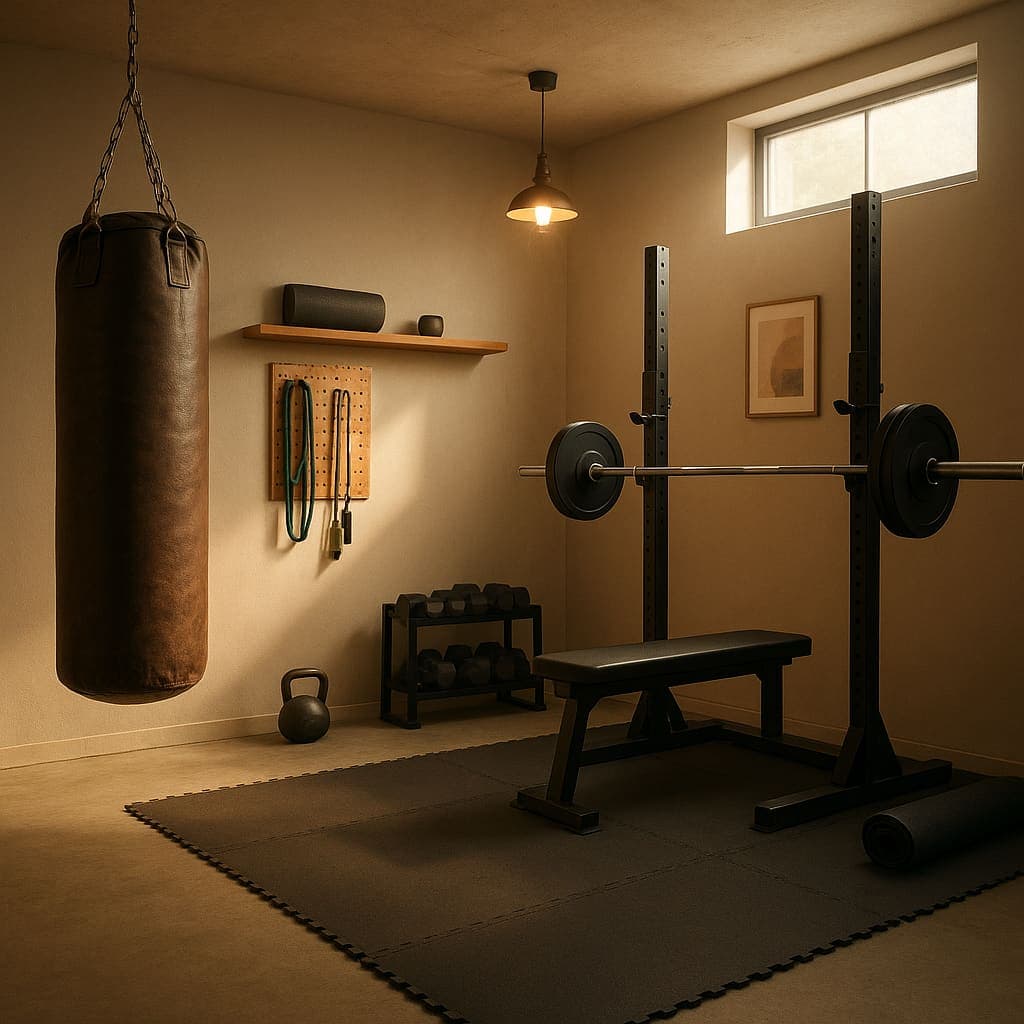
Training at a good gym is the fastest way to improve at Muay Thai, and nothing replaces a qualified coach and live training partners. But a home setup can fill the gaps between gym sessions, extend your conditioning on rest days, and keep you moving when life makes it hard to get to the gym. The good news is that a functional Muay Thai home gym can be built for a fraction of what most people assume. You do not need a dedicated room, expensive machines, or top-of-the-line equipment. You need a few well-chosen pieces and the discipline to use them consistently.
Start with the most important item: a heavy bag. A heavy bag is the single most valuable piece of equipment for solo training, and it is worth spending a little more to get one that will last. A hundred-pound bag is fine for most adults, with heavier fighters preferring a hundred-twenty-pound bag or larger. A standard hanging bag requires a ceiling mount, a reinforced beam, or a freestanding stand. The ceiling option is cheapest if you have access to a suitable beam. A freestanding bag on a weighted base is a good alternative if hanging is not possible, though it moves around more and feels slightly different under kicks. Expect to spend somewhere between one hundred and three hundred dollars for a quality bag and mounting solution.
Hand wraps and gloves are essential and cheap. A pair of wraps costs ten to fifteen dollars and should last at least a year with regular washing. A pair of Muay Thai-style gloves costs anywhere from fifty to one hundred fifty dollars for a respectable pair. Avoid the cheapest gloves you can find, because they will fall apart quickly and fail to protect your hands. Look for brands with a reputation in the Muay Thai community, like Fairtex, Yokkao, Twins, or Top King. Buying used gloves is fine if you disinfect them properly before use.
A jump rope is the single most underrated and cheapest piece of training equipment you can own. For five to twenty dollars, you get the most efficient cardiovascular tool in combat sports, something that builds footwork, rhythm, calf conditioning, and aerobic capacity all at once. Every Thai fighter jumps rope, and a beginner who spends fifteen minutes a day skipping will see their conditioning improve dramatically within weeks.
Add a mat or two for floor work and stretching. Cheap interlocking foam mats from a home improvement store cost twenty to fifty dollars and are adequate for most purposes. They provide a clean surface for bodyweight exercises, stretching routines, and basic abdominal work. If you have hardwood or tile floors, mats are essential. If you have carpet, they are optional but still helpful.
A timer of some kind, whether a dedicated boxing timer, a phone app, or a simple kitchen timer, lets you structure your rounds the way a real training session would be structured. Three minutes on, one minute off, for five or six rounds, is a standard Muay Thai format. Without a timer, solo training tends to drift, and you end up doing either too little or too much with no clear structure. Free phone apps work fine for this purpose.
Beyond the basics, useful optional additions include a resistance band set for mobility and strength work, a foam roller for recovery, a pull-up bar that fits in a doorway, and a mirror of some kind to check your form. None of these are essential, but each improves the training environment in meaningful ways. A full-length mirror in particular helps enormously with shadow boxing and technique refinement, because you can see what your body is actually doing rather than guessing.
What you do not need is a long list of fancy equipment that looks impressive but adds little. You do not need a dedicated ring. You do not need weight machines. You do not need multiple bags. You do not need a speed bag, though one is fun if you already own it. Focus the budget on the heavy bag, gloves, wraps, rope, and timer, and leave the rest for later. The best training setup in the world is worthless if you do not use it. A simple, reliable setup that you return to three or four times a week will serve you far better than an expensive facility that intimidates you into skipping sessions.